Introduction
In the world of industrial automation, Programmable Logic Controllers (PLCs) are the backbone of reliable process control. Whether you operate a power plant, a manufacturing line, or a chemical refinery, your PLC system determines how efficiently your machinery operates — and how safely your plant runs.
Three major players dominate the global PLC landscape: GE, ABB, and Honeywell. Each brand brings unique strengths to automation — from GE’s precision and speed, to ABB’s scalability, to Honeywell’s deep integration with distributed control systems (DCS).
This article compares the three systems across architecture, performance, integration, scalability, safety, and lifecycle costs — to help you determine which PLC fits your facility best.
Explore available PLC solutions at JoyyParts Automation Products.
Key Takeaways
GE PLCs excel in high-speed, discrete control and motion applications.
ABB PLCs offer flexible architectures for process and hybrid automation with strong safety capabilities.
Honeywell PLCs integrate tightly with DCS and enterprise networks for advanced process control.
Choosing the right system depends on your application type, scalability goals, and integration needs.
PLC Selection Factors and Weightage
| Factor | Importance (%) |
| Processing Performance | 12.0 |
| Communication & Integration | 11.5 |
| Reliability & Redundancy | 10.5 |
| Software Environment | 9.0 |
| Scalability | 8.5 |
| Cybersecurity | 8.0 |
| Service & Support | 10.0 |
| Initial Cost | 9.0 |
| Lifecycle Cost | 7.5 |
| Training & Ease of Use | 4.0 |
A PLC’s ability to integrate with existing systems, maintain uptime, and scale with operations carries greater importance today than raw processing speed alone.
GE PLC Architecture

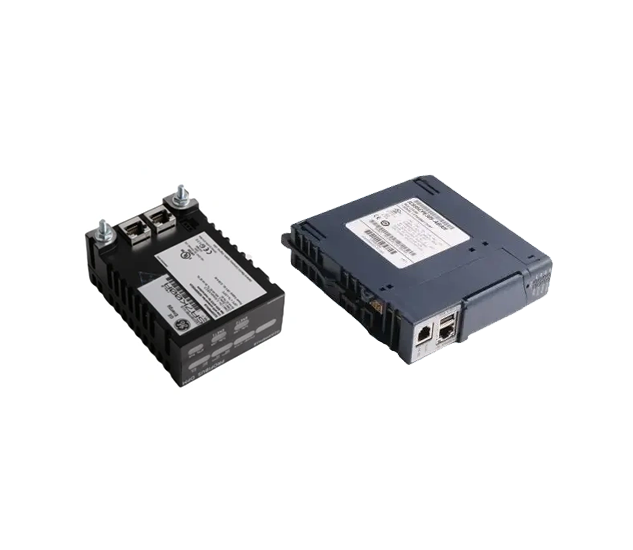
GE’s PLC family — including VersaMax, RX3i, and RSTi-EP — is known for reliability, flexibility, and speed. These platforms provide deterministic Ethernet performance, extensive I/O options, and compact form factors for discrete automation.
The RX3i series, for instance, supports dual redundancy, high-speed processors, and modular scalability from small machines to full plant control. GE’s Proficy Machine Edition software integrates PLC, HMI, and motion control programming into one environment, making it ideal for manufacturing and packaging systems requiring precision.
ABB PLC Architecture

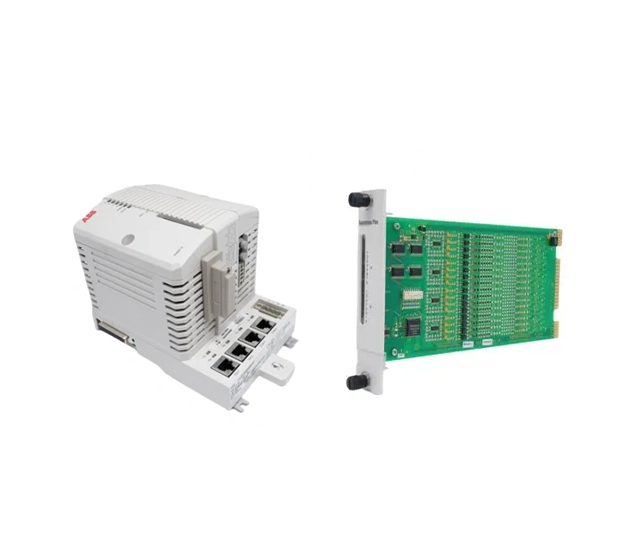
ABB’s PLC systems, including the AC500 and AC800 series, are built for hybrid and process industries. These controllers support everything from micro applications to large-scale distributed automation across thousands of I/O points.
The AC500 PLC is modular, expandable, and designed for OEM and factory automation. The AC800M, on the other hand, operates as a high-end process controller that integrates directly with ABB’s Ability™ System 800xA DCS.
This architecture offers redundant CPUs, hot-swappable modules, and safety-certified options up to SIL3, making ABB a strong choice for industries requiring uninterrupted operation and functional safety.
Honeywell PLC Architecture

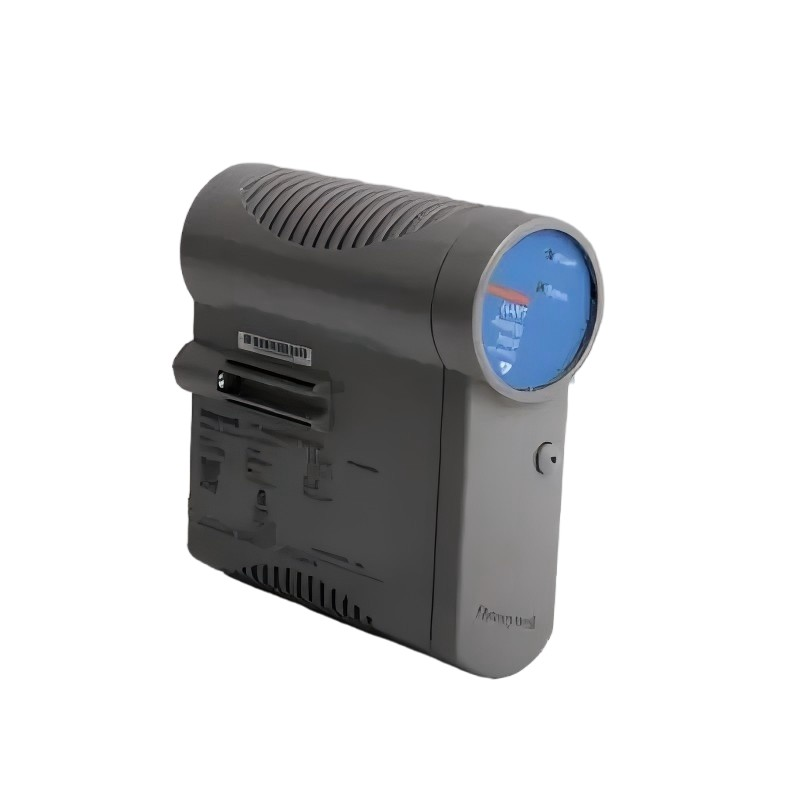
Honeywell’s PLC portfolio — led by the ControlEdge PLC and HC900 Hybrid Controller — is tailored for process and hybrid plants. Unlike standalone PLCs, these systems are designed to work natively with Honeywell’s Experion DCS and Safety Manager platforms.
With built-in OPC UA and MQTT protocols, Honeywell PLCs connect easily to IIoT applications and cloud analytics systems. They also feature secure boot, signed firmware, and role-based access control to ensure system integrity.
Honeywell PLCs are ideal for energy, chemical, pharmaceutical, and utilities operations where tight process control and cybersecurity are critical.
Performance Comparison
| Feature | GE PLC | ABB PLC | Honeywell PLC |
| CPU Speed | High-speed scanning, nanosecond-level | Moderate-High | Moderate |
| Redundancy | Optional dual CPU modules | Advanced hot-standby | Integrated DCS redundancy |
| Memory | High capacity, modular | Scalable and expandable | Large process database capacity |
| Safety | SIL2 (optional) | SIL3 | SIL3 with DCS |
| Cybersecurity | Basic | Integrated protection modules | Secure-by-design (Experion) |
| Response Time | <1ms typical | <5ms typical | <5ms typical |
GE’s edge lies in high-speed logic execution, ABB in safety and reliability, and Honeywell in integrated protection and diagnostics.
Software and Engineering Experience
GE Proficy Machine Edition brings unified control — enabling engineers to design PLC, HMI, and motion applications from one workspace. Its simulation and diagnostics tools simplify commissioning.
ABB Automation Builder combines PLC, drive, and HMI engineering with extensive libraries for motion and process control. It connects to ABB Ability™ for remote monitoring and lifecycle analytics.
Honeywell ControlEdge Builder and Experion Studio emphasize browser-based engineering and seamless integration with process control networks. This environment minimizes engineering time and simplifies operator training, especially in plants already using Honeywell DCS.
Communication and Integration
| Protocol | GE | ABB | Honeywell |
| Modbus TCP/RTU | ✔ | ✔ | ✔ |
| Ethernet/IP | ✔ | ✔ | — |
| OPC UA | ✔ | ✔ | ✔ |
| MQTT (IIoT) | — | ✔ | ✔ |
| Profibus / Profinet | ✔ | ✔ | Partial |
| DCS Integration | Moderate | Strong | Native |
All three vendors support standard industrial protocols, but Honeywell goes further by embedding DCS-level integration. ABB bridges PLC and process automation efficiently, while GE focuses on compatibility with OEM machinery and discrete control.
System Reliability, Flexibility, and Lifecycle Value
Reliability defines a PLC’s value in industrial operations. ABB and Honeywell offer redundant power and CPU configurations, with 1oo2 and 2oo3 voting logic to eliminate single points of failure. Honeywell’s ControlEdge system aligns with API 670 and IEC 61508 safety standards for continuous process protection.
Scalability is another critical factor. GE’s modular racks allow users to start small and expand without hardware redesign. ABB’s architecture scales from microcontrollers to enterprise-wide automation. Honeywell’s PLCs integrate seamlessly into larger Experion DCS frameworks — ensuring hybrid scalability.
In terms of lifecycle value, all three manufacturers provide extended product support. However, Honeywell leads in 20+ years of service continuity, while ABB maintains global lifecycle programs for spare parts and firmware.
Through JoyyParts, plants can source authentic PLC modules, firmware updates, and migration assistance, preserving long-term reliability at lower total ownership cost.
Industry Applications
| Industry | GE PLC | ABB PLC | Honeywell PLC |
| Manufacturing / OEM | ✔✔✔ | ✔✔ | ✔ |
| Power Generation | ✔ | ✔✔ | ✔✔✔ |
| Oil & Gas | ✔ | ✔✔✔ | ✔✔✔ |
| Chemicals / Pharma | ✔ | ✔✔ | ✔✔✔ |
| Water & Wastewater | ✔✔ | ✔✔✔ | ✔ |
| Mining & Metals | ✔✔ | ✔✔✔ | ✔✔ |
GE systems dominate manufacturing and packaging; ABB leads in process automation and utilities; Honeywell is the go-to for refining, energy, and hybrid industries that demand integration between DCS and PLC layers.
Pros and Cons Summary
| Vendor | Strengths | Weaknesses |
| GE | Fast scan rate, cost-effective, good for discrete & OEM control | Limited redundancy, smaller support network |
| ABB | Excellent scalability, safety features, and reliability | Higher engineering complexity |
| Honeywell | DCS integration, cybersecurity, long lifecycle | Higher initial cost, steeper learning curve |
Choosing the Right PLC for Your Facility
Selecting the best PLC depends on more than hardware specifications. Consider the following:
Process type — discrete, hybrid, or continuous.
Integration — compatibility with existing DCS/SCADA systems.
Safety and redundancy — required SIL level and uptime expectations.
Future scalability — expansion needs for I/O, logic, and communication.
Lifecycle support — vendor service coverage and spare parts availability.
For objective recommendations and system compatibility checks, contact JoyyParts, your trusted automation partner.
Explore PLC Solutions
Frequently Asked Questions
What are the main differences between GE, ABB, and Honeywell PLCs?
GE specializes in discrete and motion control. ABB bridges both factory and process automation. Honeywell focuses on process plants that require DCS-level integration and safety.
Which PLC is best for process vs. discrete control?
GE suits discrete manufacturing, ABB fits mixed environments, and Honeywell is ideal for continuous process industries such as oil, gas, and chemicals.
Can GE, ABB, and Honeywell PLCs connect to DCS or SCADA systems?
Yes, all three support standard protocols like Modbus, OPC, and Ethernet. Honeywell offers direct integration into Experion DCS; ABB connects easily via System 800xA; GE integrates through open protocols.
Which PLC offers the best cybersecurity and redundancy?
Honeywell and ABB lead with advanced redundancy, secure firmware, and role-based access controls. GE includes basic security features suitable for smaller automation systems.
Where can I buy authentic GE, ABB, and Honeywell PLC hardware?
You can purchase verified modules and spares through JoyyParts, which supplies genuine PLC parts with global delivery and warranty.
Conclusion
Each brand serves a different automation philosophy:
GE offers compact, fast, and reliable PLCs for OEM and discrete automation.
ABB combines modular scalability with high safety for large process plants.
Honeywell unifies PLC and DCS technology for advanced process and hybrid operations.
The right choice depends on your facility’s operational goals and integration strategy.
Partner with JoyyParts for expert support, genuine PLC modules, and lifecycle service solutions that keep your plant running smoothly.
Contact JoyyParts for PLC Consultation and Pricing